


Chaska Willakuq
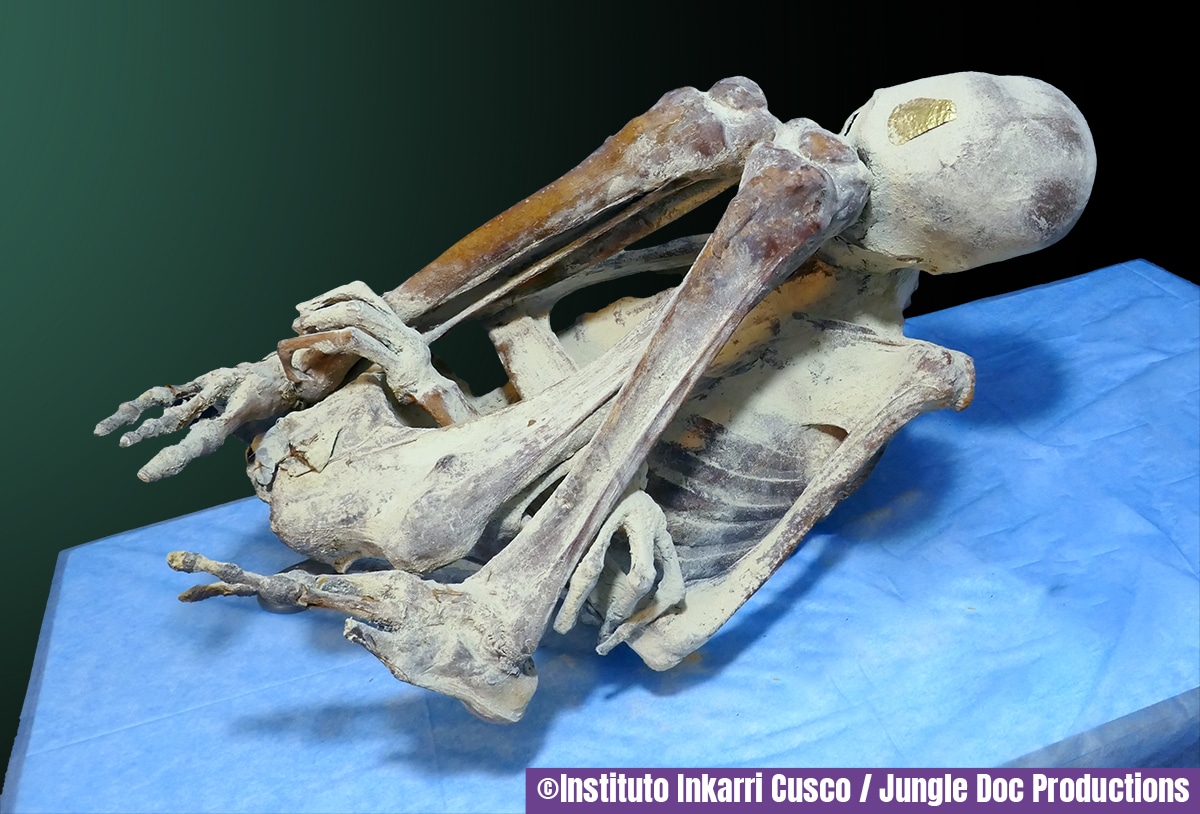
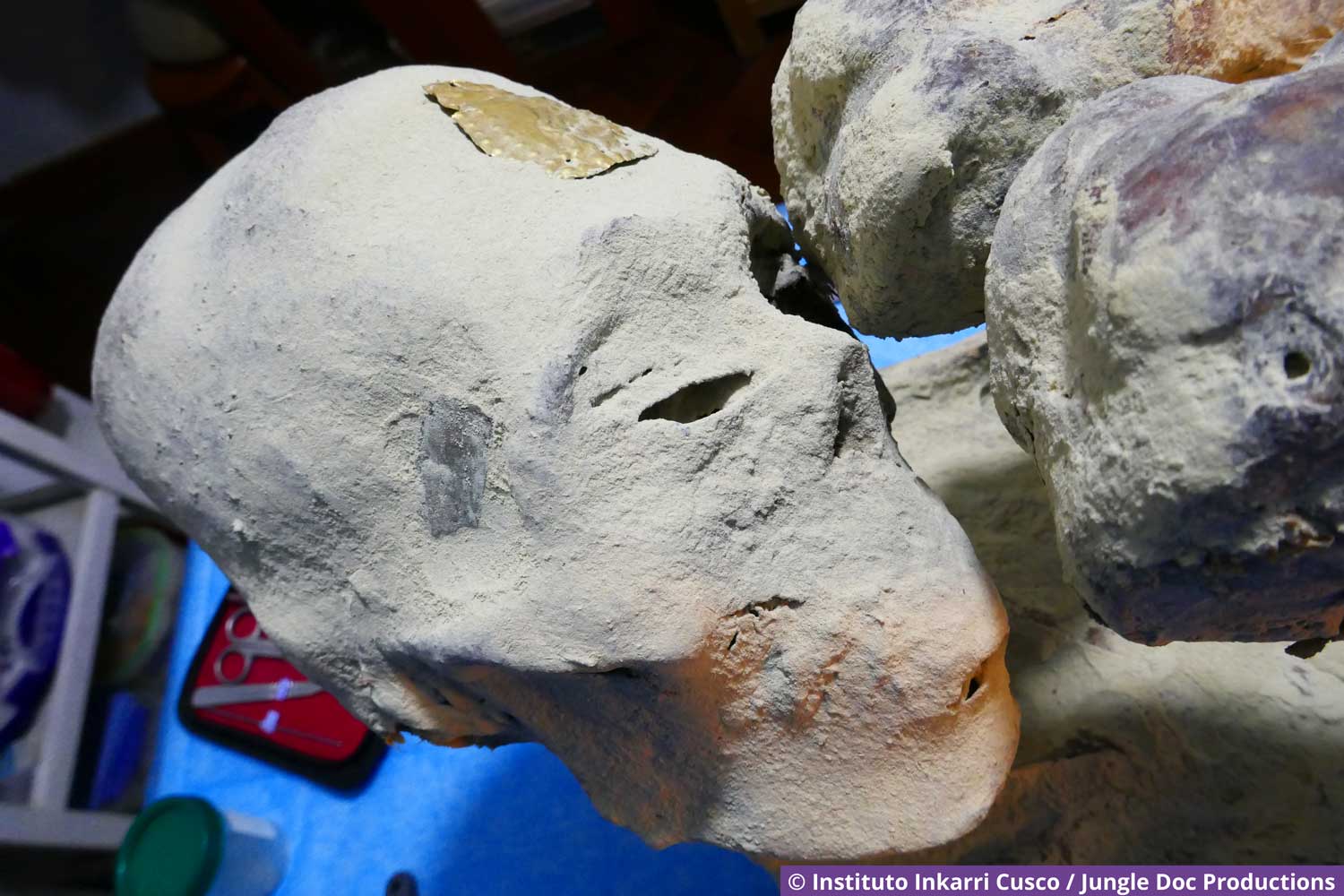
Chaska Willakuq is a particularly well-preserved, three-fingered hybrid mummy. It features two metal implants in the head.
Characteristics of the tridactyl mummy
Height: 1.67 m
Species: Hybrid
Gender: Probably male
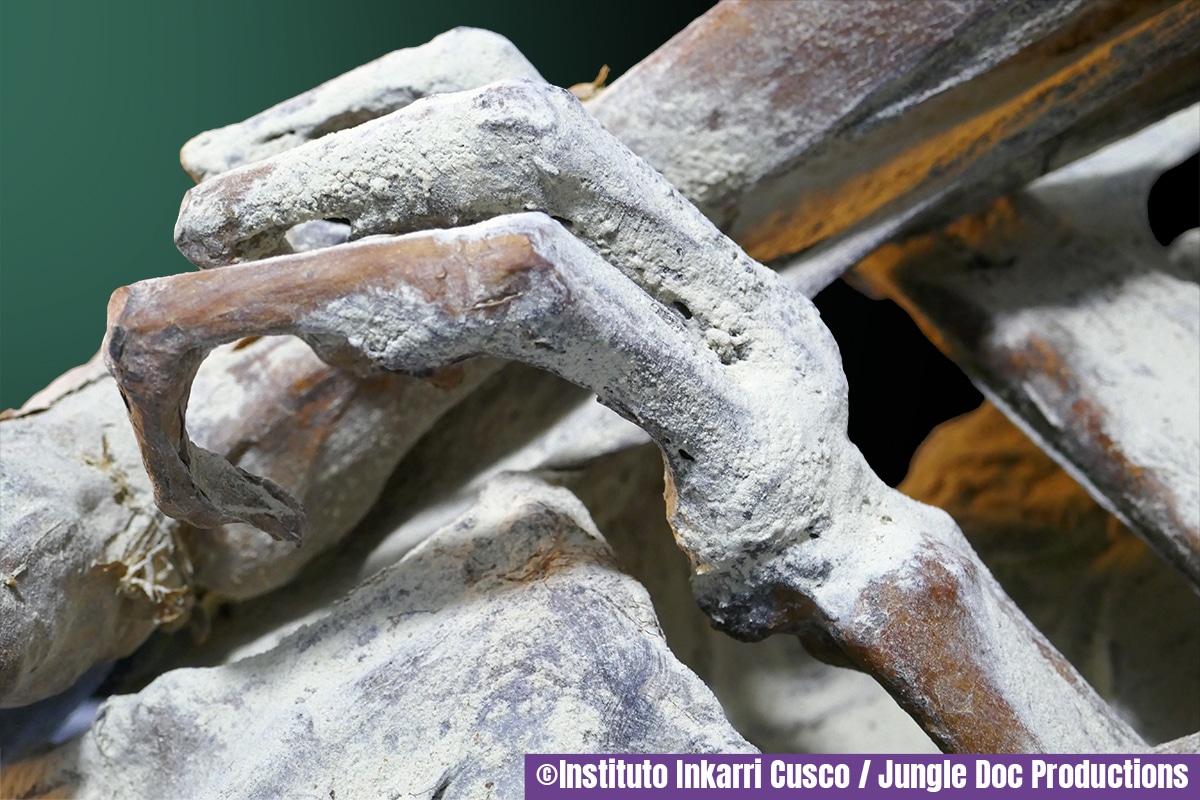
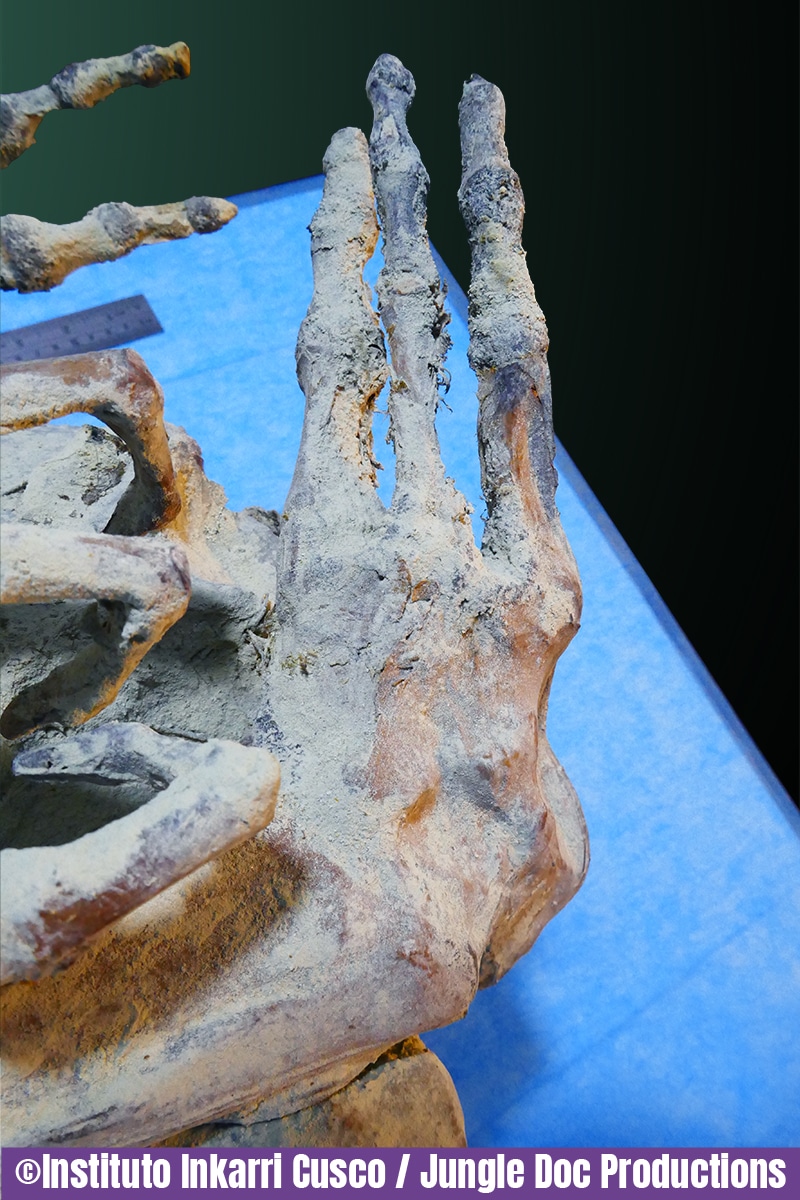
Three-fingered hands and feet with four phalanges
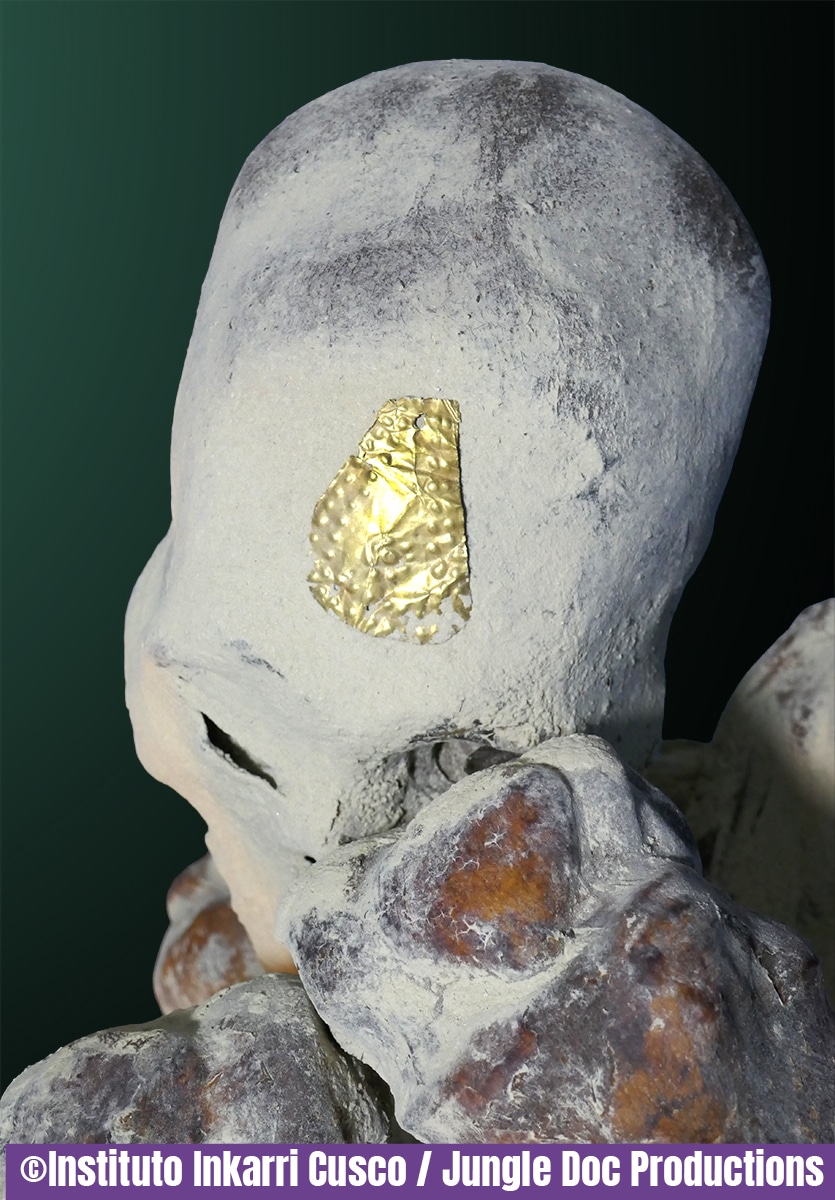
Two metal implants on the head
The head
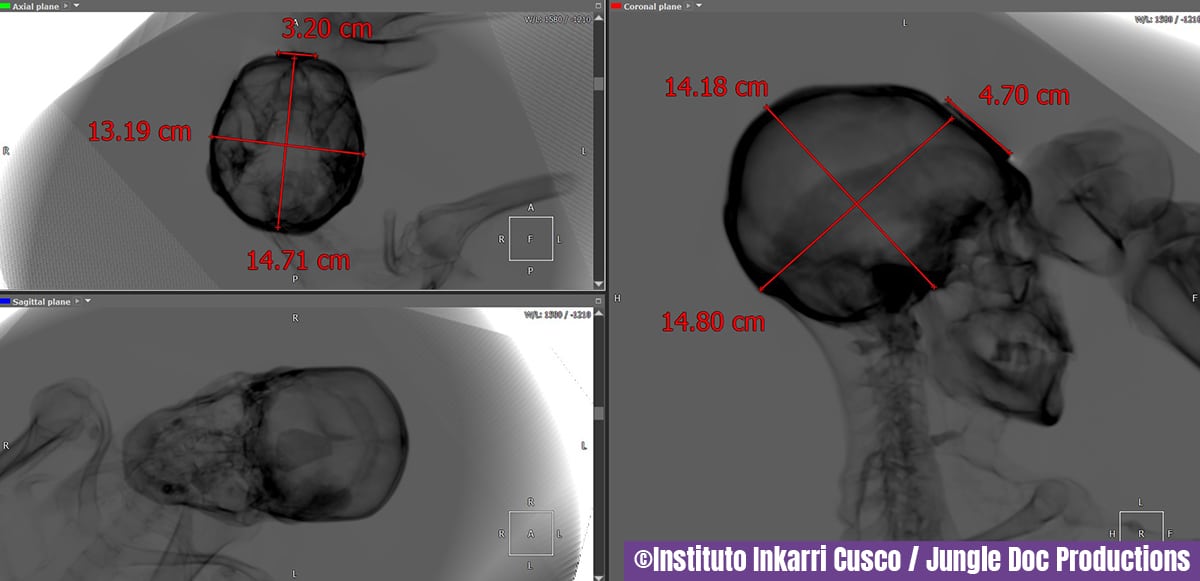
Dimensions
The brain
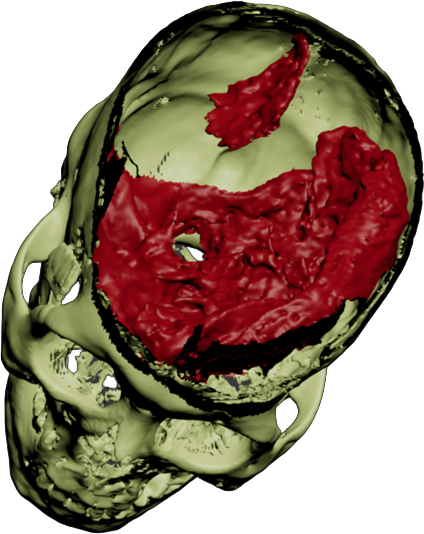
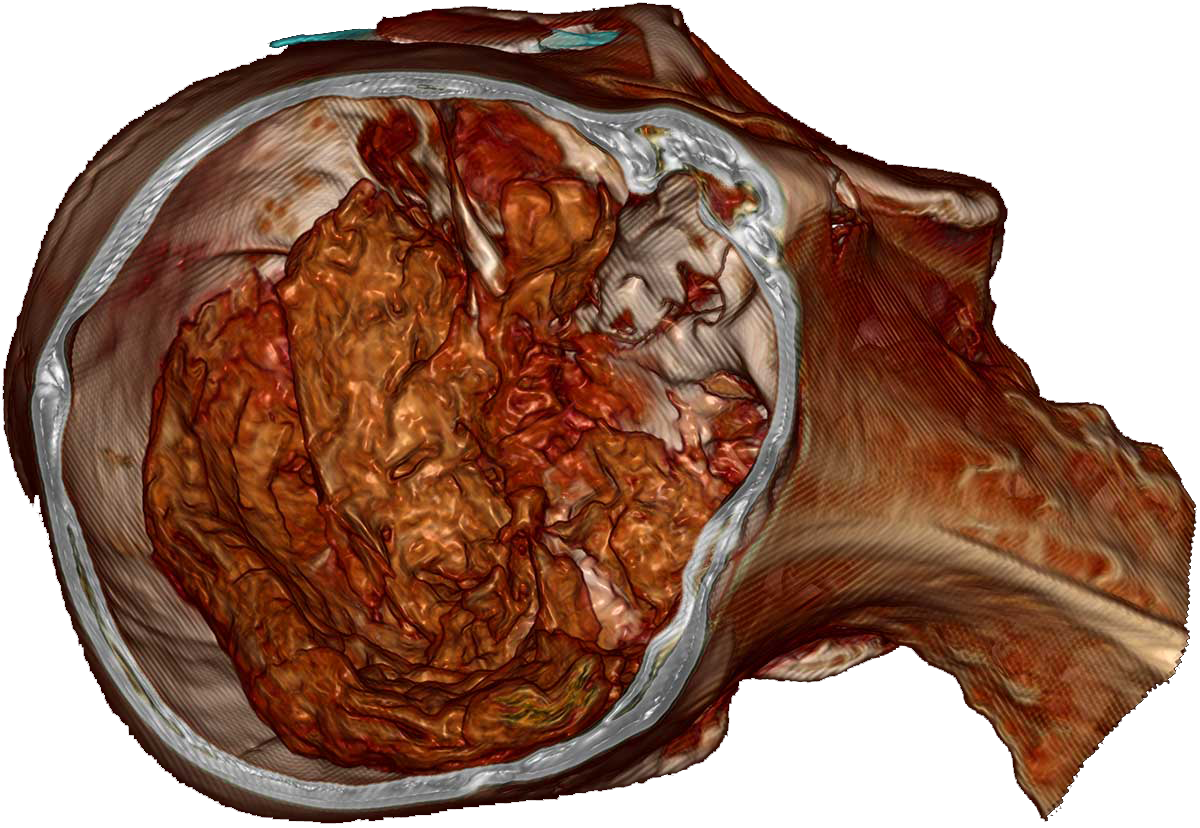
During mummification, the brain shifted within the skull at an angle that corresponds to the tilt of the head.
The auditory system
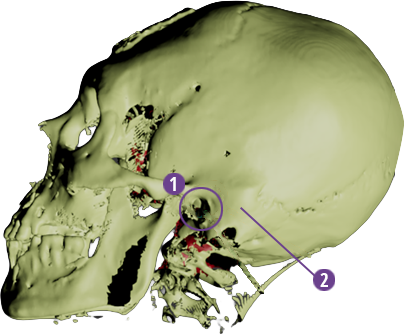
- A hole in the skull for the auditory system; no trace of an ear on the epithelial layer (skin, tissues)
- Auditory system: The petrous part of the auditory system is connected to the temporal bone of the skull; “petrous” means “stone-like, hard.” It refers to the hardness of tooth enamel.
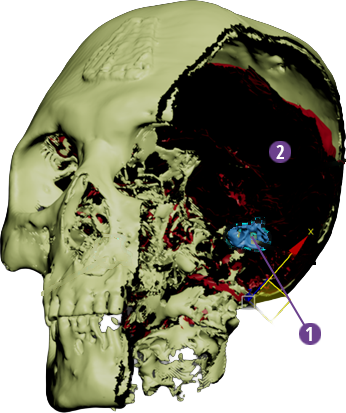
- Ear pavilions firmly attached to the skull and brain.
- Brain
Teething
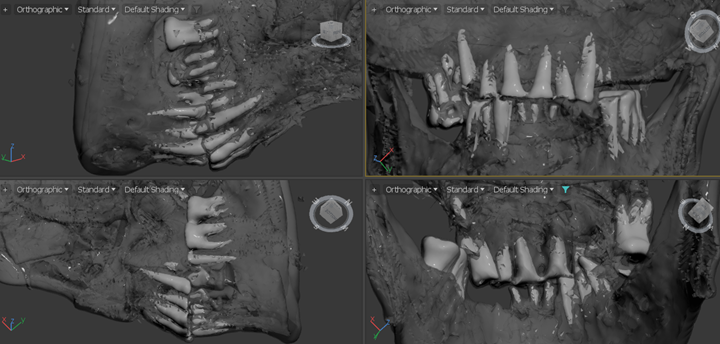
The enamel layer of the teeth, within the bone structure, is shown in light gray. Some teeth are missing.
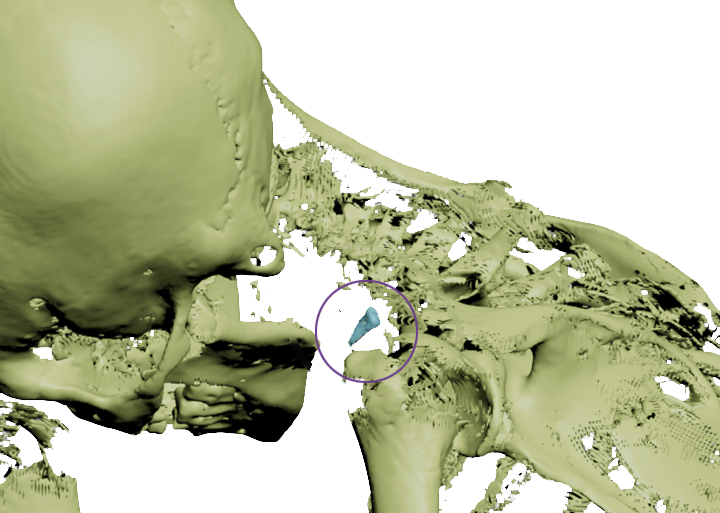
A tooth seems to have fallen into the larynx.
Metal implants
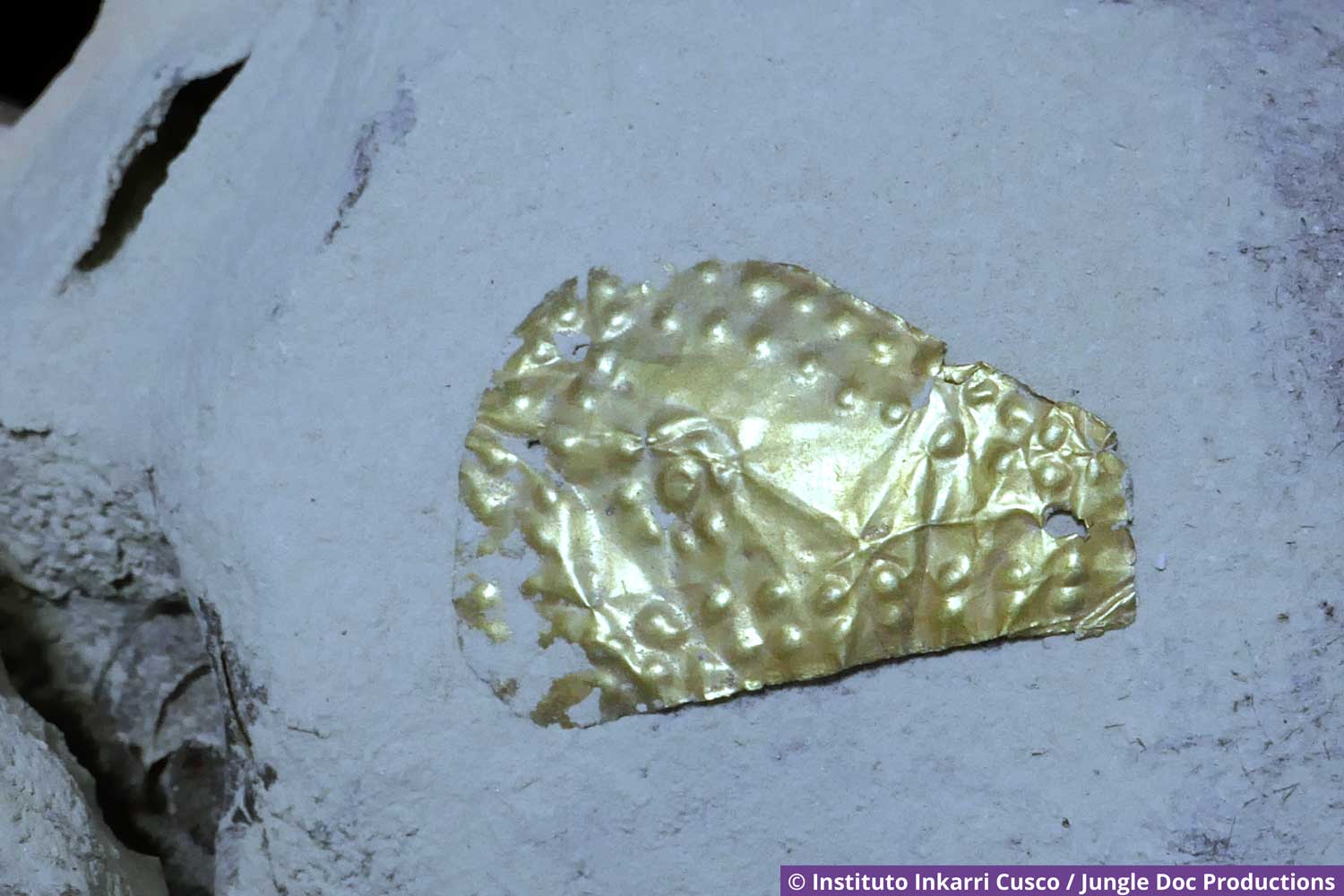
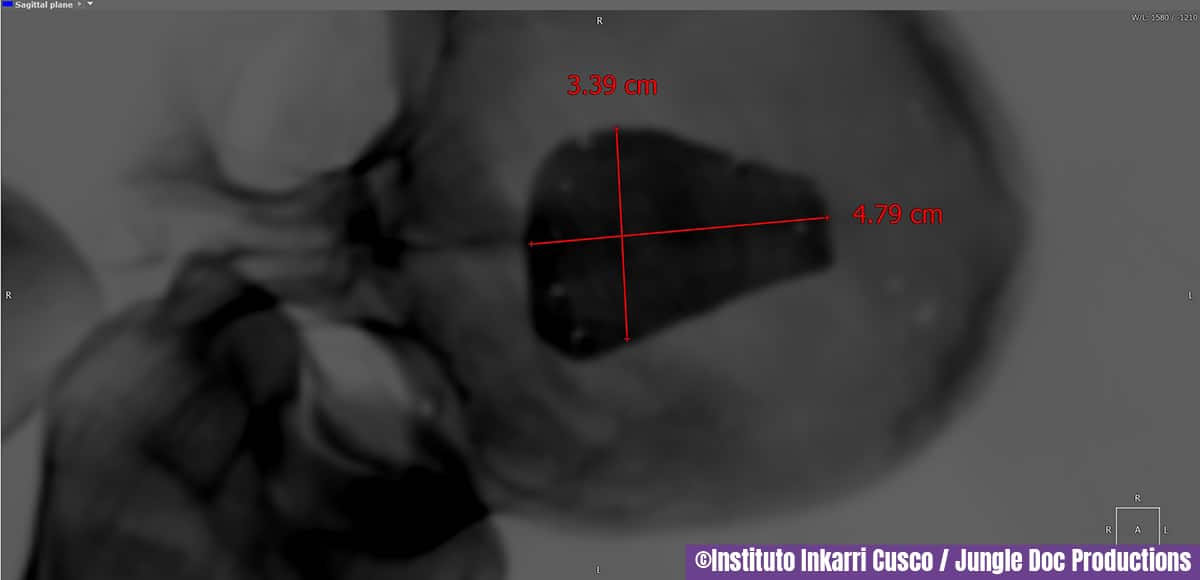
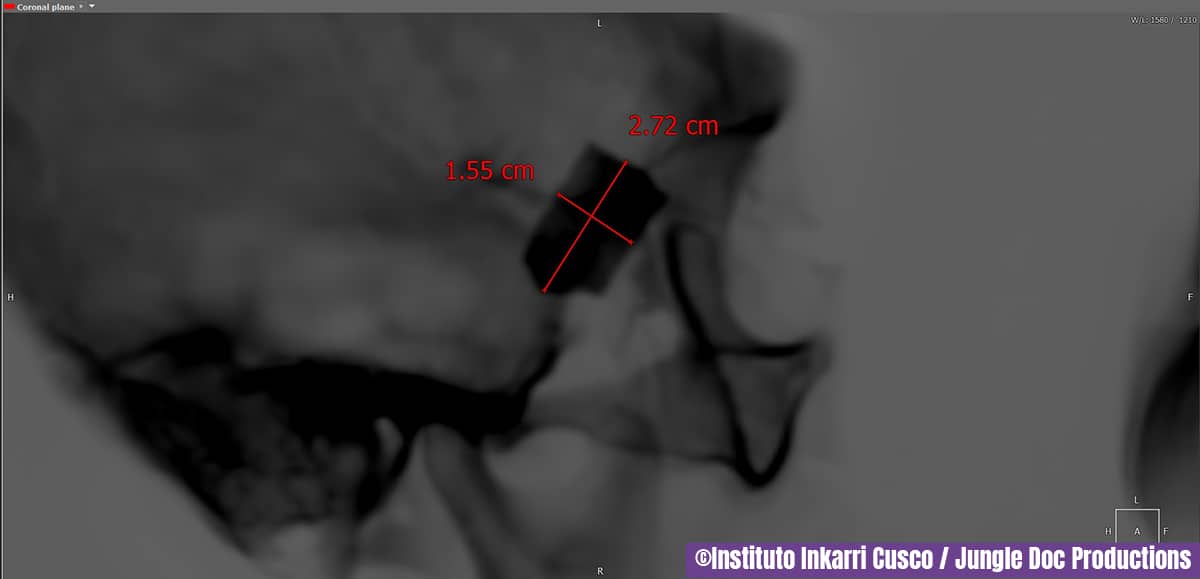
A metal implant on the forehead of the three-toed mummy Chaska Willakuq
Dimensions
The torso and the spine
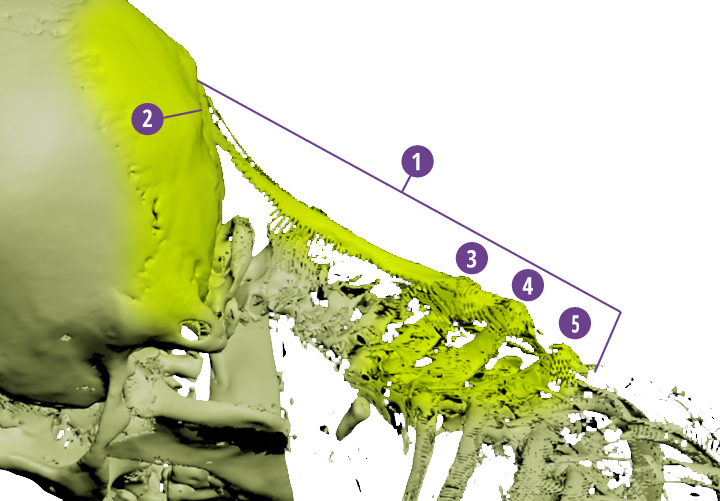
The spine is very similar to a human spine. However, there is one distinctive feature:
- 1. A very thin structure is attached to the base of the skull,
- 2. to the occipital bone,
- 3, 4, 5. and then connected or attached to the first (3), second (4), and third (5) thoracic vertebrae.
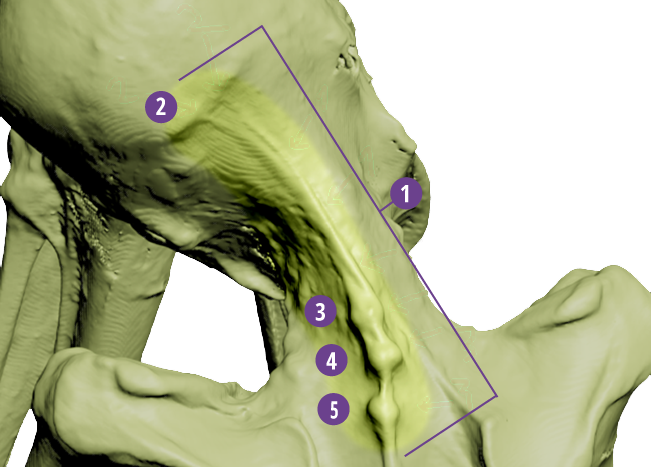
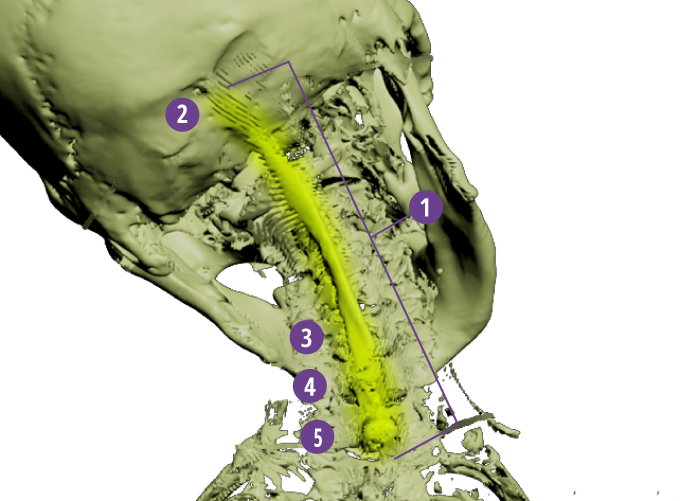
View of this structure beneath the epithelial layer (skin):
- 1. surface of the structure, visible beneath the skin due to the tension caused by desiccation,
- 2. “V”-shaped attachment to the occipital bone at the base of the skull,
- 3, 4, 5. attachments to the three thoracic vertebrae.
The hands
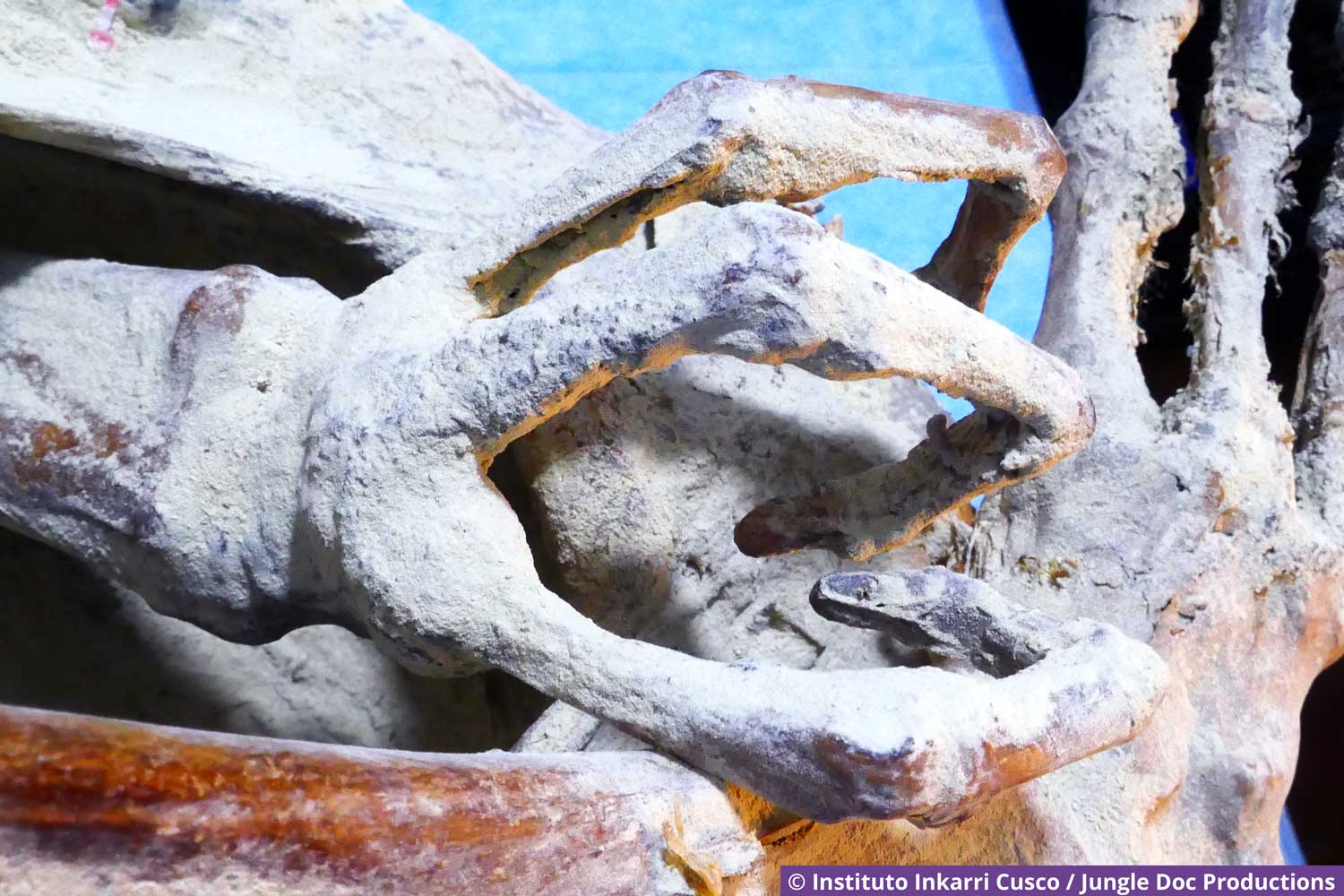
Left
Right
The pelvis
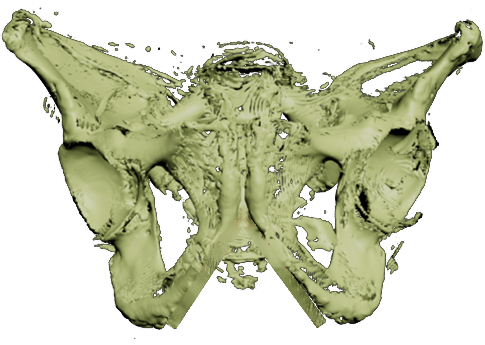
Based on the pelvic girdle, it can be surmised that Chaska is male. However, further analysis is needed to confirm this.
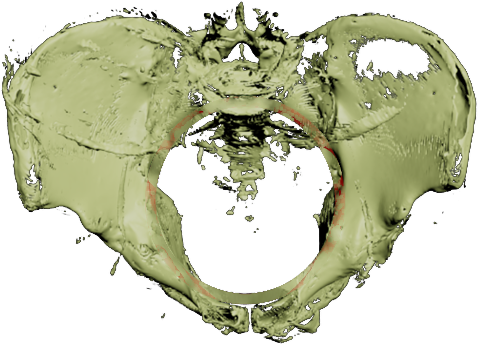
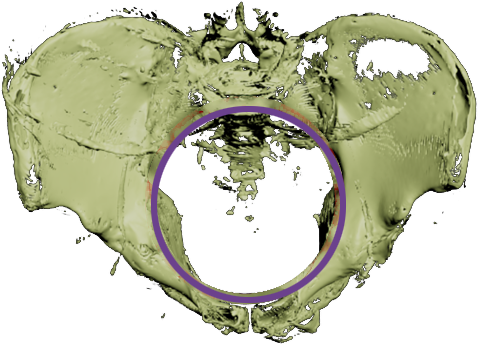
Front view
The pelvic rim is narrower and smaller than in a female.
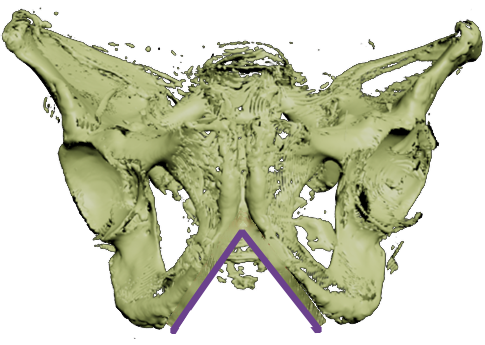
Top view
The angle of the pubic arch is less than 90° (greater than 90° in females).
The feet
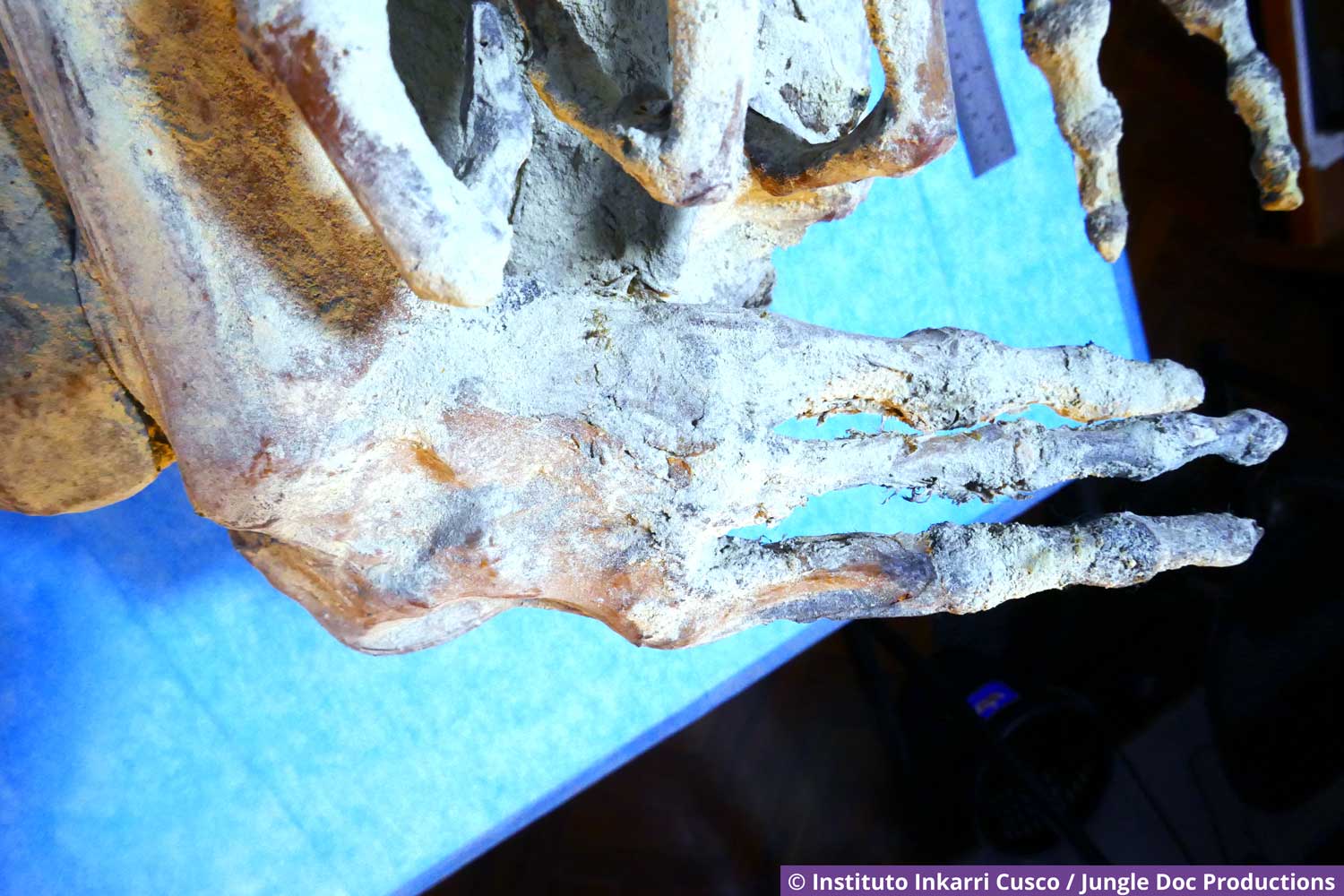
Left foot
Right foot
Dr. Celestino Adolfo Piotti's analysis of the tridactyl mummy
Here we present the findings of Dr. Piotti, a specialist in physical and medical anthropology, regarding the three-toed mummy Chaska Willakuq.
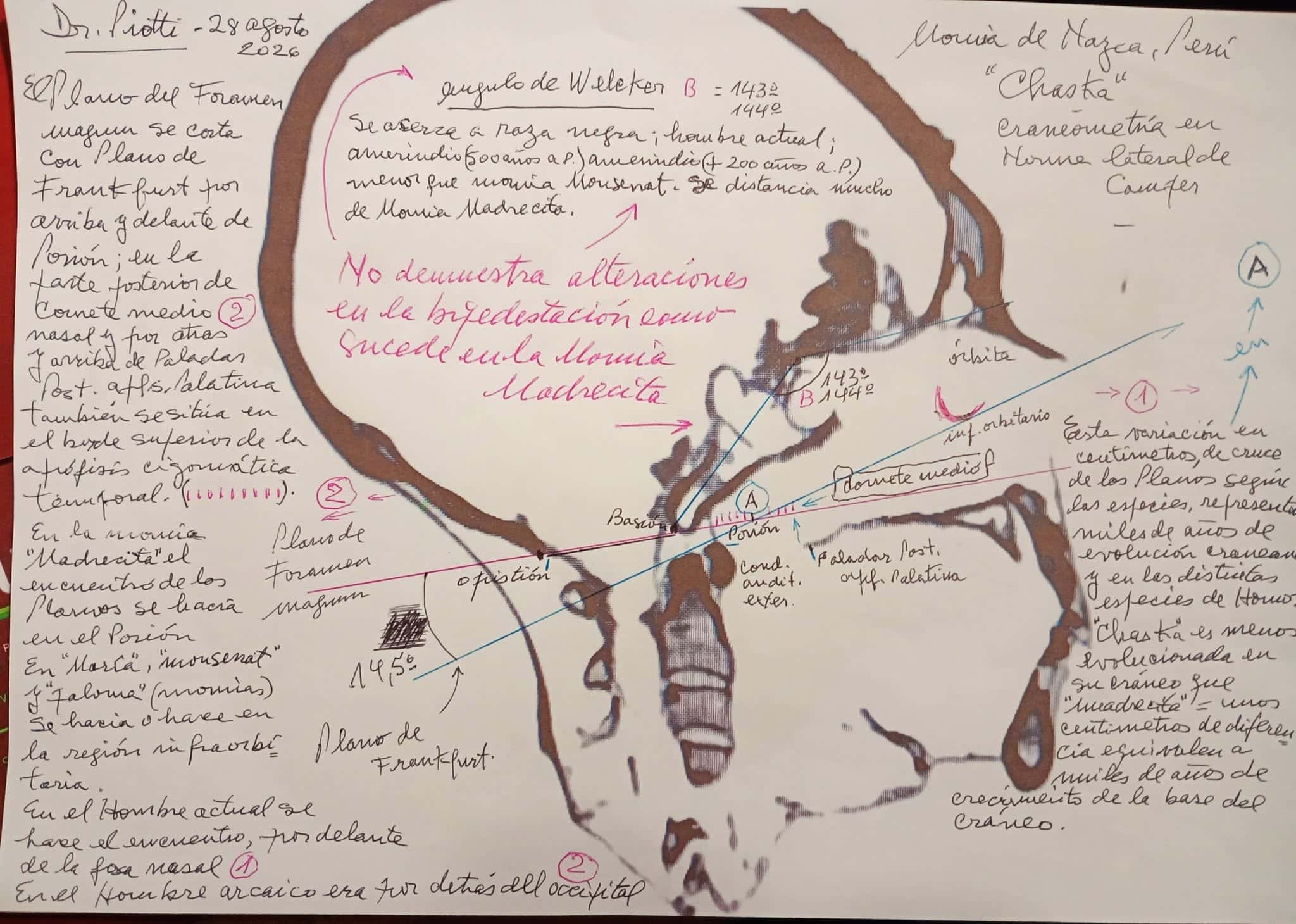
The method
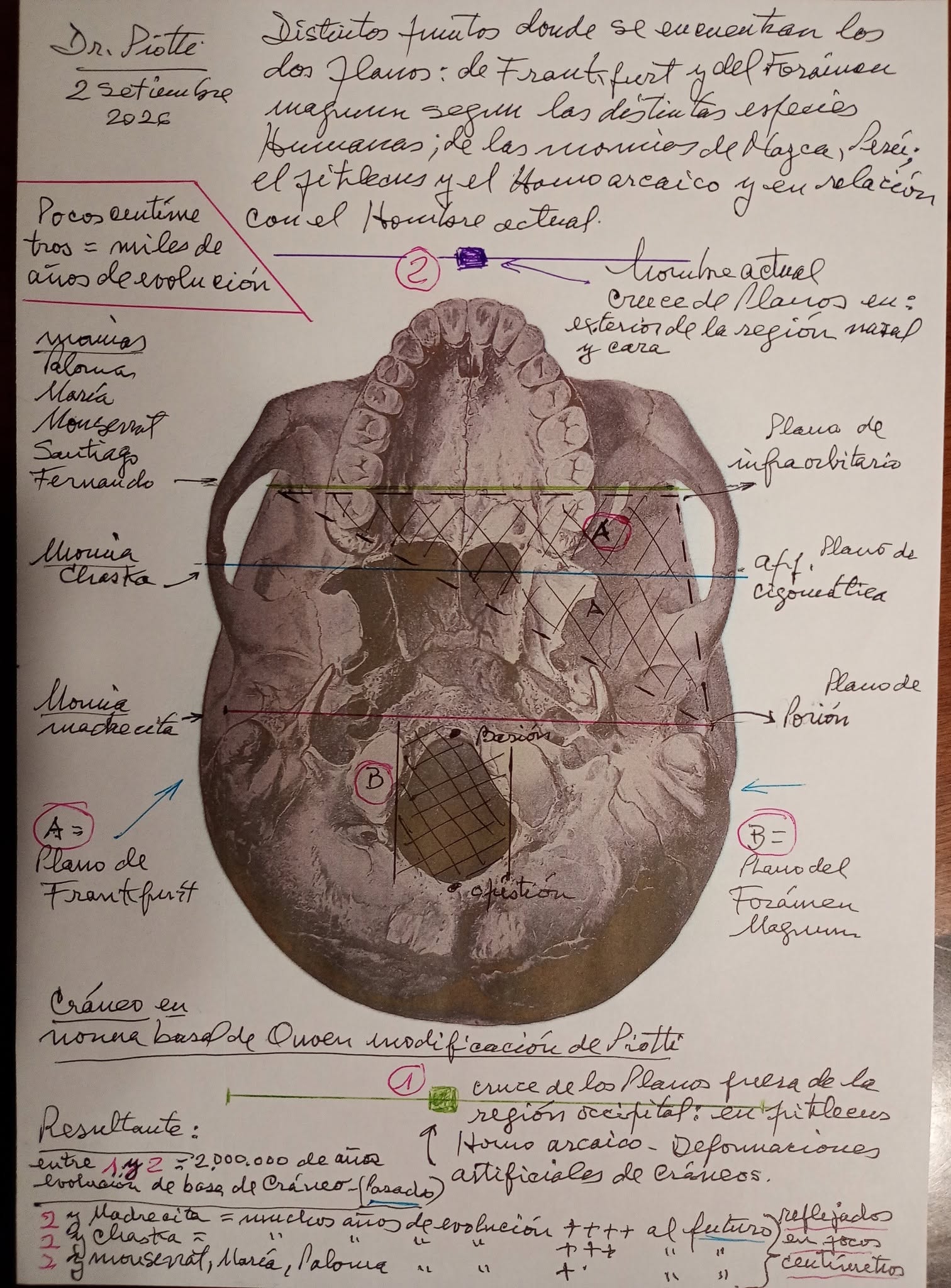
Dr. Piotti, an Argentine medical anthropologist, studies the insides of mummies’ skulls. He draws two imaginary lines inside the skull: a standard reference line used by all specialists, and another that passes through the opening where the spinal cord connects to the brain. According to him, the precise point where these two lines intersect within the skull reveals two things: how the creature walked on its two legs, and what its brain’s capabilities were. He compares this intersection point to that of modern humans, prehistoric humans, and apes. Depending on where it is located, he estimates that the skull is more or less “advanced.” A difference of just a few centimeters, he argues, represents immense differences in terms of evolution.
The classification of mummies
He applies this method to seven mummies discovered in Peru: Chaska, Madrecita, Monserrat, Paloma, María, Santiago, and Fernando.
The result: their heads are so different from one another that they cannot be considered members of the same people, or even of the same species. The most “advanced” would be Madrecita, followed by Chaska, then the other five. And above all, according to him, all of them would be more “advanced” than modern humans—he even goes so far as to say that, according to his theory of evolution, they come “from further in the future.” This theory is a far cry from what conventional science teaches.
The case of Chaska
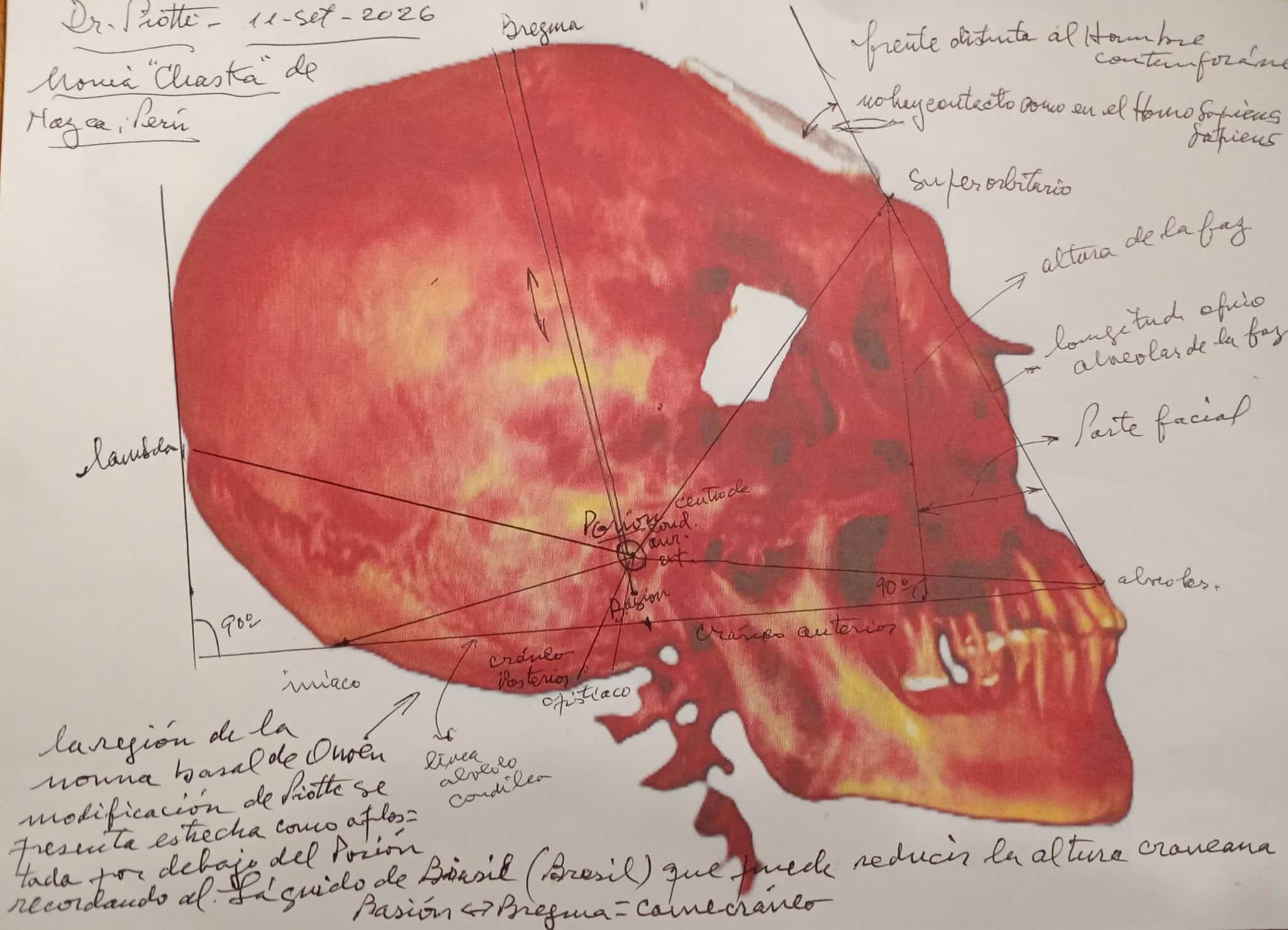
Chaska is examined in detail. Her head is elongated and narrow, with a sloping crown: according to Dr. Piotti, this is due to the sutures between the skull bones fusing much too early, when she was a baby, forcing her head to grow in unusual directions. It is the only mummy in the group to retain an ear. Its teeth tell the story of a hard life: it lost three molars as early as childhood, had difficulty eating, and frequently suffered from dental infections. Its face is a curious mix of ancient and modern features, very different from our own. A puzzling fact: his head resembles those resulting from the deliberate flattening of infants’ skulls (a common practice among the ancient peoples of Peru), yet no traces of this practice are visible. Dr. Piotti concludes that his head took on this shape naturally, which would be highly unusual.
How Chaska was buried
A cross-section from the CT scans shows that what remains of his brain—dried out over the centuries—has settled toward the front and left side of his head. This is a reliable clue: gravity caused the remains to settle in that direction. Chaska was therefore buried curled up in a fetal position, lying on his left side. Dr. Piotti takes this opportunity to reiterate a rule of common sense: when a mummy is displayed in a museum, it should be presented in the exact position in which it was buried. This is more accurate and better preserves the mummy.
To find out more...

TRIDACTYLS The truth before us
52-page booklet
Buy

TRIDACTYLS Season 2
Documentary 6x60 min
Buy on VOD

TRIDACTYLS Season 1
Documentary 6x52 min
Buy on VOD


Lost Paititi & the Non-Human Remains of Nazca
English only
Buy